
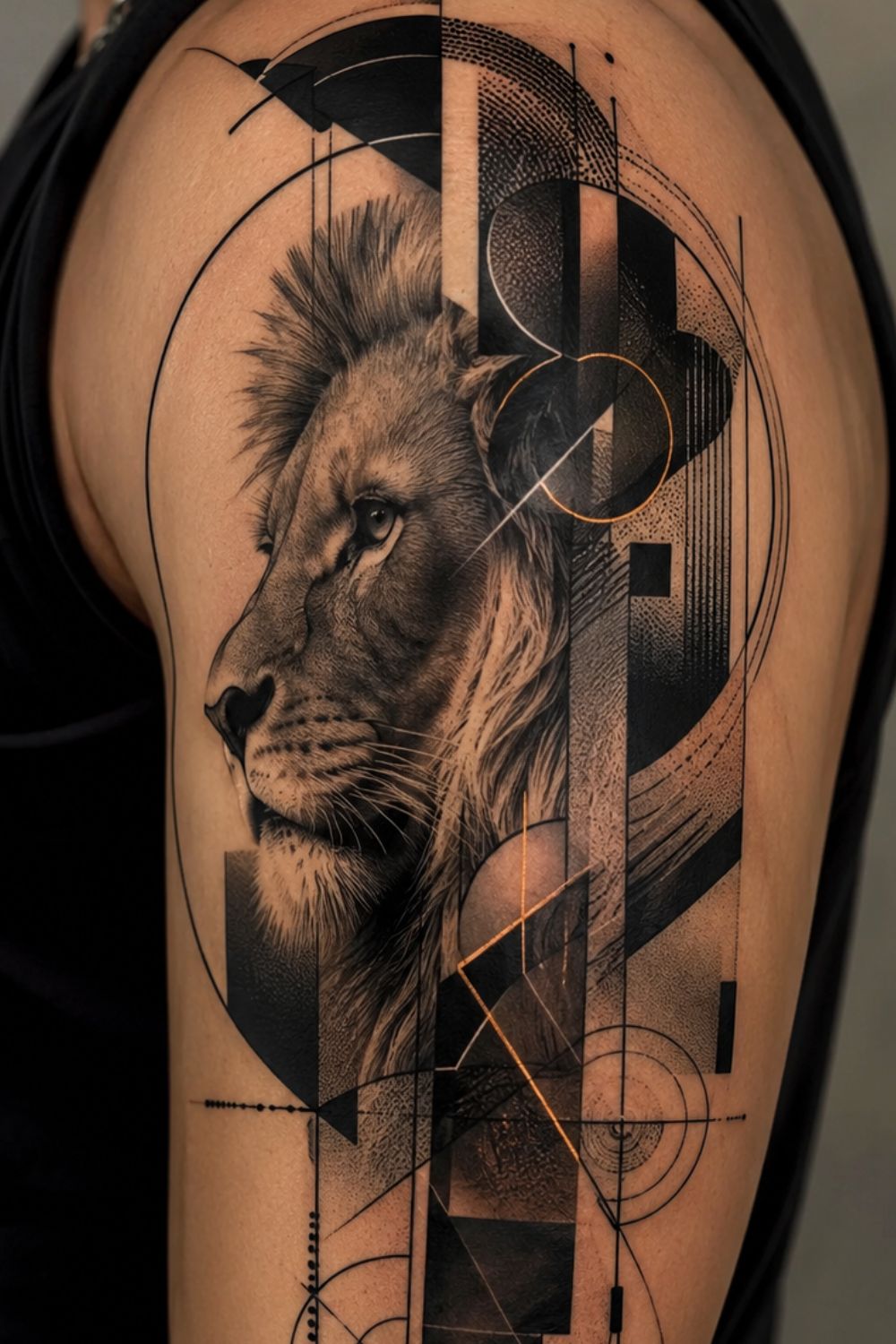
Tattoos have changed a lot and if you’ve been paying attention, you will probably notice that the work coming out of studios today looks nothing like it did even ten years ago. The colors are richer, the transitions are smoother, and somehow it all just looks more alive. A big part of that shift comes down to one thing modern blending.
Simply put, blending is the technique that allows colours and shading to transition into each other naturally, without harsh lines or flat patches of colour. When it’s done well, it gives a tattoo that painterly, almost three-dimensional quality that makes people stop and look twice. You know that feeling when you see a piece and can’t quite figure out how it was done? That’s usually blending at its best.
What’s really changed though isn’t just the technique itself, it’s how far the innovation behind it has come. Better inks, sharper understanding of how pigment settles into skin, and more refined tools have all made it possible to create work that doesn’t just look stunning when it’s fresh , it actually holds up and stays looking that way for years.
So if you’re thinking about your next tattoo and you want something that’s both visually powerful and built to last, this is worth reading. We’re breaking down exactly what modern blending is, how it works, and why it might just be the smartest direction for your next piece.
What Is Modern Blending in Tattooing?
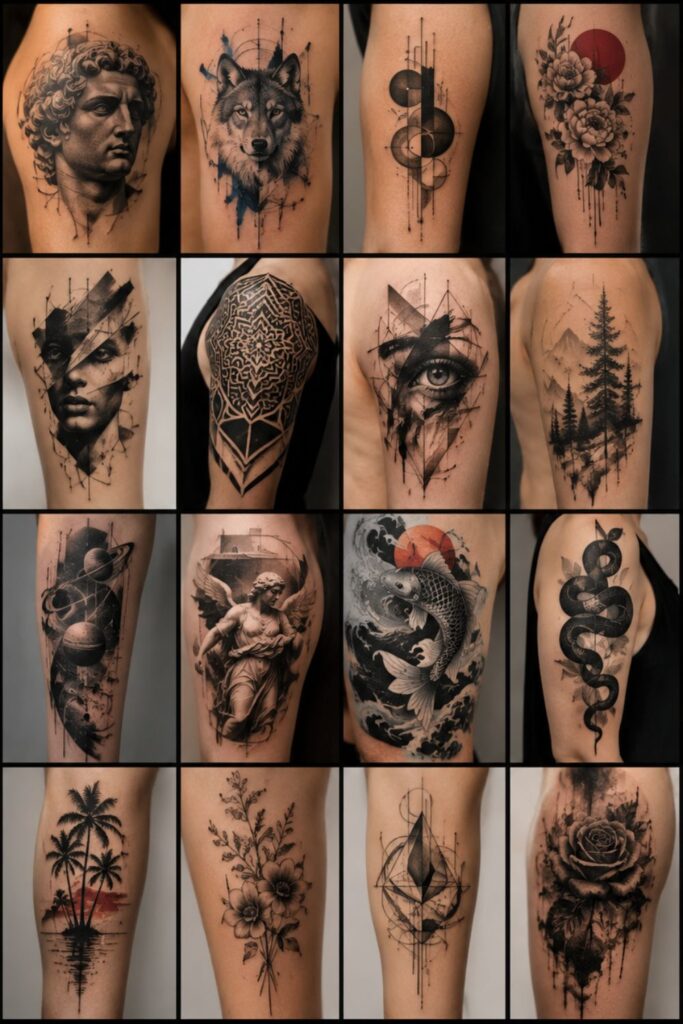
If you’ve ever looked at a tattoo and noticed how the colors seem to flow into each other effortlessly, or how the shading feels soft and dimensional rather than flat that’s blending. It’s not a gimmick or a trend. It’s a technique, and when it’s executed well, it completely transforms what a tattoo looks and feels like on skin.
Blending in tattooing is the process of transitioning between colors, tones, or shades in a way that feels smooth and natural rather than abrupt. Instead of one color stopping and another starting, they graduate into each other the same way light and shadow work in a painting or a photograph.
The Different Types of Blending Styles
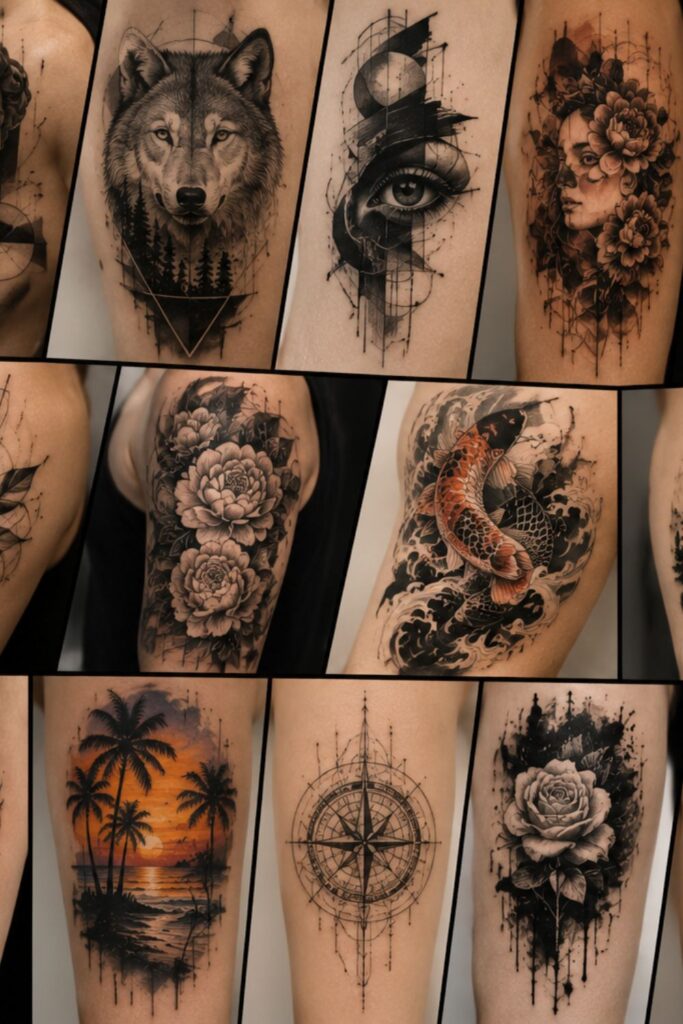
Not all blending looks the same and that’s honestly one of the most exciting things about it. Depending on the direction you want to go, there’s a blending style that fits. Here are the five main ones worth knowing about.
Color Blending – Smooth Transitions Between Hues
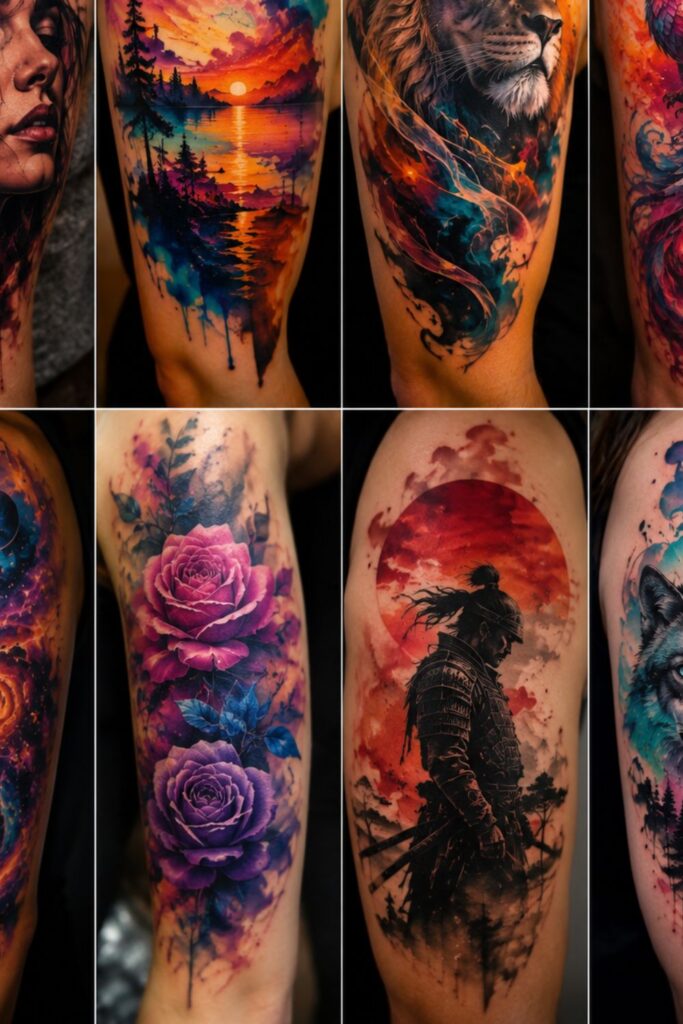
Color blending is probably the first thing that comes to mind when most people think about modern tattooing. It’s the technique of taking two or more colors and transitioning them into each other so gradually that you can’t quite pinpoint where one ends and the other begins.
Done well, it creates a richness and warmth that flat color simply can’t match. Think of a sunset sleeve where deep oranges melt into purples and blues, or a floral piece where each petal shifts through a spectrum of pinks and reds. The colors don’t just sit on your skin they glow.
What makes this style particularly impressive is the level of control it demands. Too much pressure and the colors muddy. Too little and the transition looks patchy. The best color blending artists have spent years developing the touch it takes to get it right and when they do, the results are genuinely stunning.
Black and Grey Blending — Depth, Shadow and Dimension
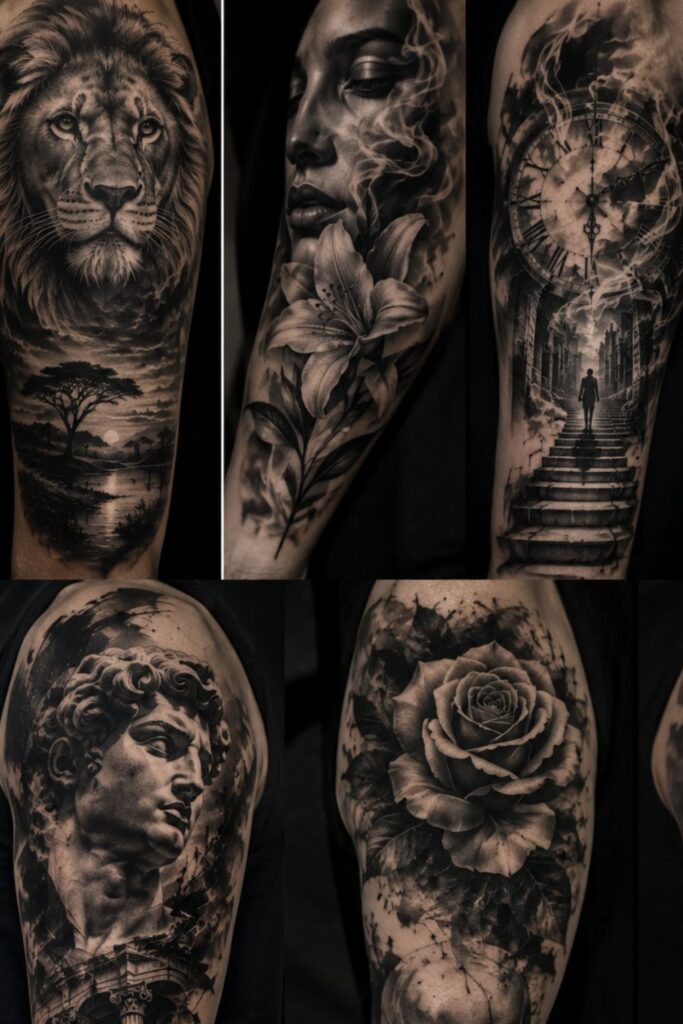
Black and grey blending is one of the most timeless approaches in tattooing and also one of the most technically demanding. Instead of working with color, the artist uses varying dilutions of black ink from deep solid black all the way down to the faintest whisper of grey to create depth, shadow, and dimension.
The effect it produces is almost cinematic. Portraits done in black and grey blending look three dimensional. Landscapes feel atmospheric. Animals come alive with texture and weight. It’s the kind of work that makes you look twice because your brain almost can’t process that it’s a tattoo and not a photograph.
What sets great black and grey blending apart is the smoothness of the gradient. There should be no visible steps or bands between tones just one continuous, seamless shift from dark to light. That level of finish takes serious skill and an intimate understanding of how different dilutions of ink behave once they settle into skin.
Watercolor Blending — Soft, Painterly and Fluid
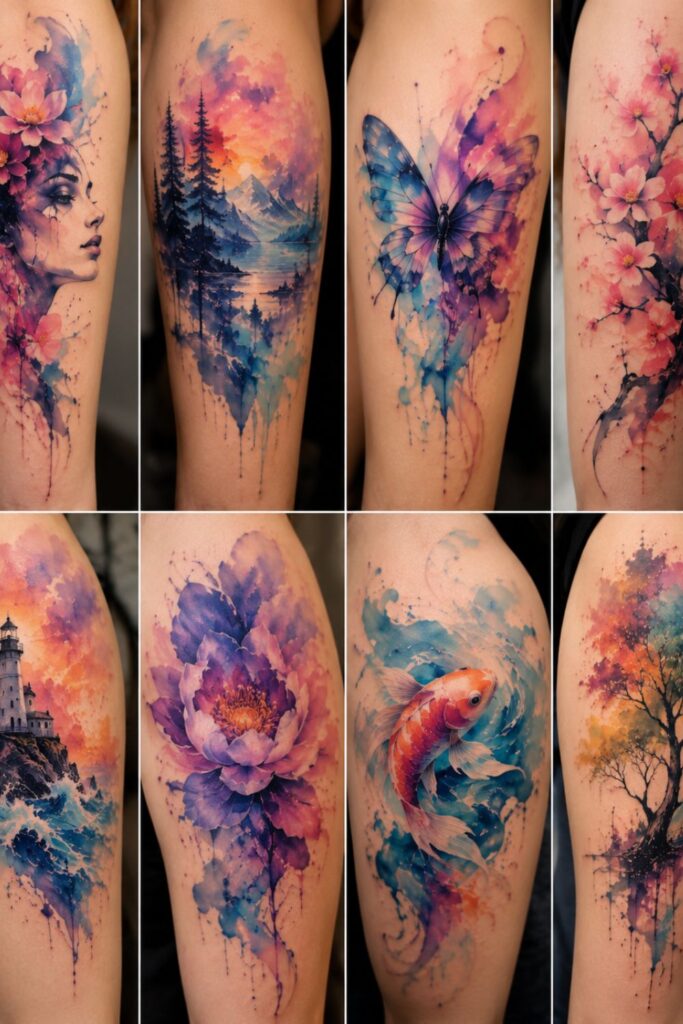
If there’s a blending style that looks the least like a traditional tattoo, it’s watercolour. Inspired directly by watercolour painting, this style uses soft washes of colour, loose edges, and flowing pigment to create something that looks like it was brushed onto skin straight from a palette.
There’s an effortless, almost dreamlike quality to watercolour tattoos that no other style quite replicates. A hummingbird surrounded by soft splashes of teal and gold. An abstract floral piece where the petals dissolve into colour at the edges. A landscape that bleeds softly into bare skin. It’s delicate, it’s expressive, and in the right hands it’s breathtaking.
It’s worth being honest here though watercolor blending is one of the more high maintenance styles when it comes to longevity. Because it relies heavily on lighter pigments and softer edges, it can fade faster than bolder work if it’s not done with the right inks and technique. That makes choosing an experienced artist absolutely essential if this is the direction you’re going in.
Geometric Blending — Structure Meets Softness

Geometric blending is where precision and fluidity come together in a way that feels almost contradictory until you see it done well. It takes the clean lines and structured patterns of geometric tattooing and softens them with blended shading and gradient fills that add depth and warmth to what would otherwise be rigid forms.
Think sharp triangles that fade from deep black at their edges into soft grey at their centres. Mandalas where each section shifts through a gradient of colour. Sacred geometry designs that feel dimensional rather than flat. The contrast between the hard structure of the shapes and the softness of the blending is exactly what makes this style so visually compelling.
It works beautifully as a sleeve concept because the geometric elements give the composition clear structure while the blending keeps it from feeling cold or mechanical. It’s bold and precise but never harsh and that balance is genuinely hard to pull off.
Check next: Bold sleeve tattoo showcasing powerful art work
Realism Blending — Lifelike Depth and Precision
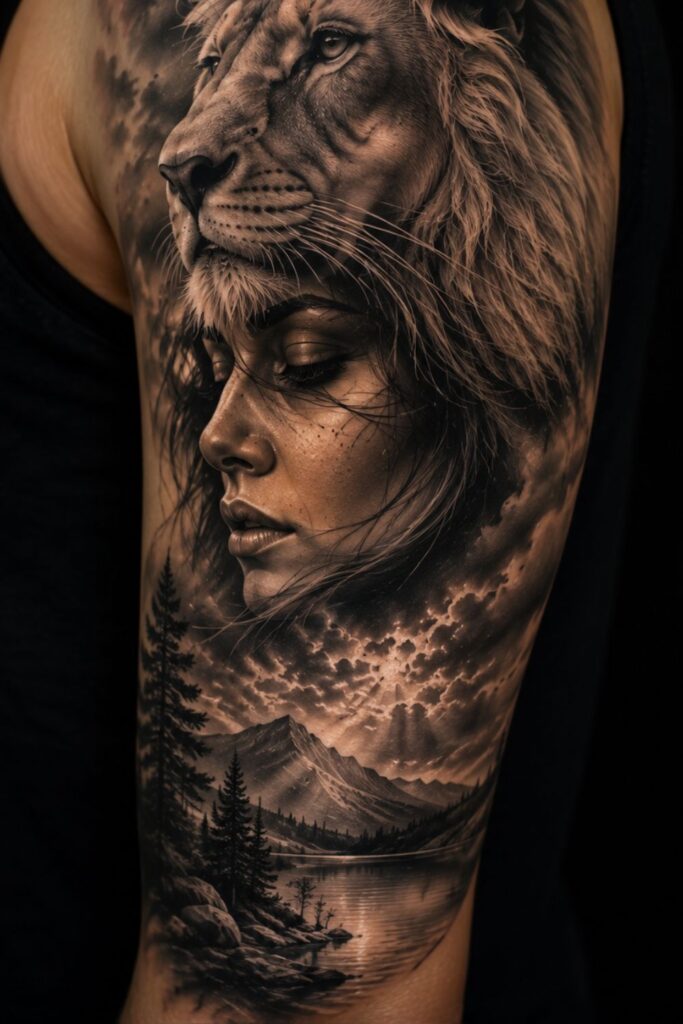
Realism blending is the most technically demanding style on this list and arguably the most impressive when it’s executed at the highest level. The entire goal of this approach is to make a tattoo look as close to a real photograph or painting as possible, and blending is the tool that makes that achievable.
Every shadow, every highlight, every subtle shift in tone has to be placed with intention and precision. A portrait done in realism blending needs to capture the way light falls across a face. A wildlife piece needs to replicate the texture of fur or feathers with enough accuracy that it reads as real at a glance. There’s no room for shortcuts here.
What separates a good realism tattoo from an extraordinary one is almost entirely in the blending. The smoother and more accurate the transitions between light and dark, the more convincing the illusion. The best realism artists in the world are essentially painters working in a medium that happens to be human skin.
The Innovation Behind Modern Blending
The tattoos you’re seeing today that stop you mid-scroll the ones with seamless gradients, impossible depth, and color that looks almost luminous didn’t happen by accident. They’re the result of years of innovation happening quietly behind the scenes. Better materials, smarter tools, and a much deeper understanding of skin have all come together to make modern blending what it is. Here’s a closer look at what’s actually changed.
How Artists Are Pushing Boundaries With New Techniques
The tools and inks have opened the door but it’s the artists themselves who are walking through it and doing things that genuinely haven’t been done before. The current generation of tattoo artists is arguably the most technically skilled and creatively ambitious the industry has ever seen, and they’re approaching blending in ways that continue to raise the bar.
Layering is one of the biggest shifts in technique. Rather than trying to achieve a blend in a single pass, skilled artists now build up color and tone in multiple layers working from dark to light, adding depth gradually, and refining the transitions with each pass. It takes longer, it demands more patience, but the result is a richness and dimension that a single-pass approach simply can’t produce
Design Inspiration — Blending Ideas Worth Trying
Sometimes the hardest part isn’t committing to a tattoo, it’s figuring out what you actually want. If you’re drawn to blending but haven’t landed on a concept yet, here are four directions that consistently produce some of the most striking blended work out there.
Nature and Botanical Concepts
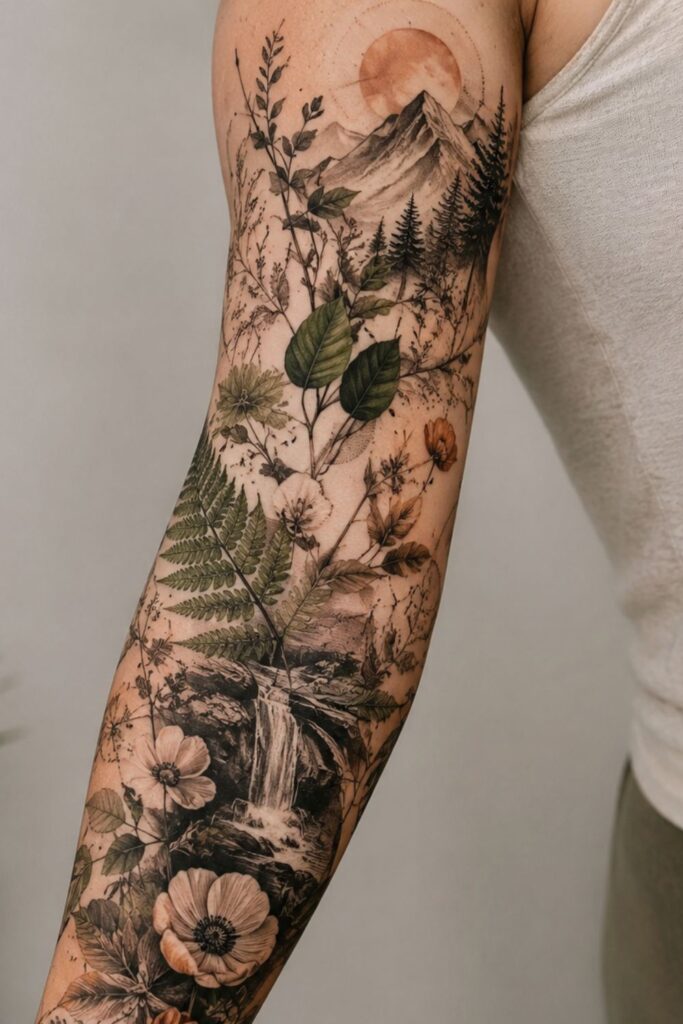
Nature is one of those subjects that just makes sense for blending. The colors exist in gradients already a flower petal doesn’t go from pink to white in a hard line, it shifts. A forest doesn’t have a single shade of green. Blending simply reflects what nature already does.
Think cascading botanicals running down a forearm, each leaf and petal shifting through its own tonal range. Or a landscape piece where a mountain fades into mist and the sky bleeds from deep blue into soft amber. Wildlife works beautifully here too a hummingbird catching light, a koi fish moving through water, a wolf emerging from shadow.
Portrait and Realism Pieces

Portraits are where blending earns its reputation. There’s no style that shows off what modern blending can do quite like a well-executed realism portrait whether it’s a person, an animal, or a face that carries personal meaning to you.
The blending here is everything. It’s what creates the illusion of skin texture, the way light falls across a cheekbone, the softness in a pair of eyes. Without it you just have a flat likeness. With it you have something that genuinely moves people.
Abstract and Surrealist Directions

If you want something that doesn’t follow any rules, abstract and surrealist blending gives you complete creative freedom. This is the direction where imagination takes over and the only brief is that it should feel like something even if it can’t quite be named.
Think melting forms, dreamlike color transitions, shapes that suggest figures or landscapes without fully committing to them. Surrealist pieces often combine recognizable subjects a face, a flower, an eye with elements that feel distorted or otherworldly. The blending is what makes it all feel cohesive rather than chaotic.
This direction works especially well for people who want something deeply personal and entirely one of a kind. No two abstract blending pieces ever look the same, which means yours will genuinely be yours.
Dark and Moody Color Palettes

Not every blended tattoo needs to be bright and colorful. Some of the most powerful blending work is built entirely on dark, muted tones deep forest greens, bruised purples, smoky blues, burnt oranges fading into black.
Dark palette blending creates a richness and atmosphere that vivid colors don’t always achieve. It feels cinematic. Considered. Like every tone was chosen with real intention. It works across almost any subject botanicals, portraits, abstract forms, creatures and gives the whole piece a mood that stays with you.
Conclusion
Modern blending isn’t just a technique it’s where tattooing is heading. The combination of better inks, smarter tools, and a deeper understanding of skin has created a standard of work that keeps raising the bar, and honestly, it’s only going to get more impressive from here. If you’ve been on the fence about your next piece, this is a good time to pay attention to what’s possible.
That said, don’t rush it. The best tattoo you’ll ever get is the one you thought about carefully, chose an artist for intentionally, and committed to fully. Take your time with the concept, do your research, and don’t settle until something genuinely excites you. Bold decisions make for the best ink.

